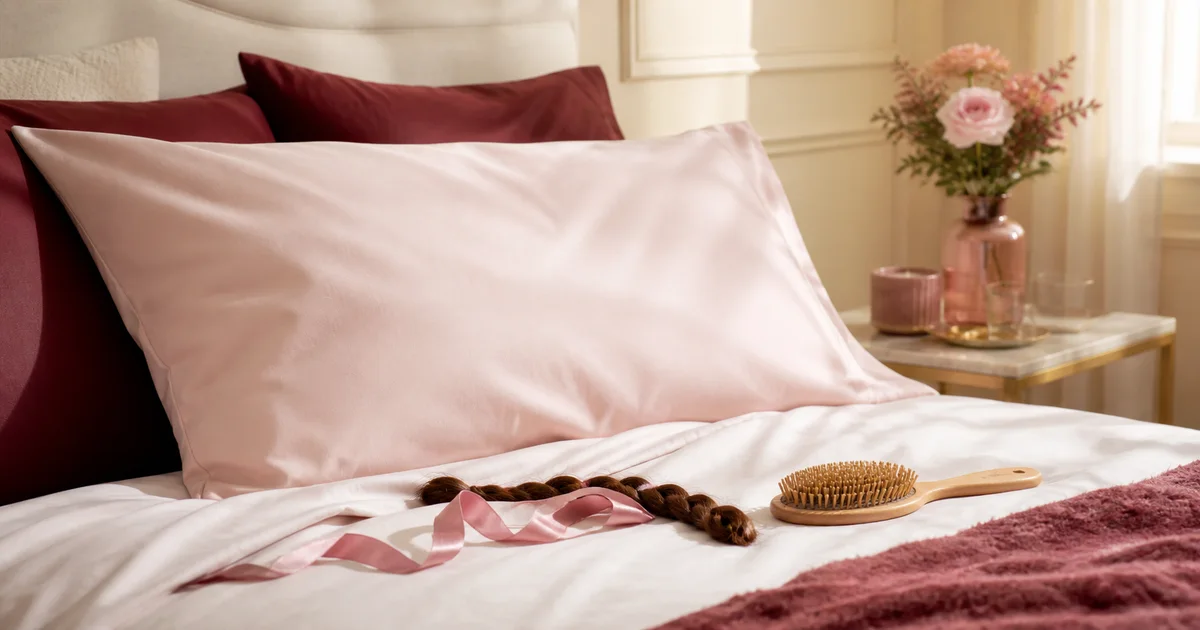
Change pillowcases at least once a week, and more often if you sweat heavily, use hair oils or styling products, have dandruff, or wake with oily skin. A pillowcase collects oil, sweat, skin cells, hair products, and dust over several nights.
It is not a magic acne cure, but regular washing is a simple hygiene habit that can reduce repeated contact with buildup.
A practical schedule
Once weekly works for many people. Change it every two to three days if you exercise often, sleep hot, apply oil before bed, or have active scalp flaking. If you have acne or very oily skin, a clean pillowcase more frequently may feel better, but it should complement rather than replace skincare.
Use a gentle, fragrance-free detergent if your skin is sensitive, and rinse thoroughly. Fabric softener and strongly scented products can irritate some people.
Hair-friendly habits
Let hair dry before bed, especially after washing. Avoid sleeping with heavy oil or wet hair pressed into the pillow, and use a loose style that does not pull. A smooth fabric may reduce friction, but cleanliness and low tension matter more than a particular fabric.
If dandruff persists, read Dandruff vs Dry Scalp and consider professional advice. Pillowcases cannot treat a scalp condition.
Frequently Asked Questions
Is changing pillowcases daily necessary?
Usually no. Weekly is a practical baseline, with more frequent changes for sweat, oil, products, or skin conditions.
Can pillowcases cause acne?
They can collect buildup that may irritate skin, but acne has multiple causes.
Are silk pillowcases cleaner?
Not automatically. Any fabric needs regular washing.
Should I change pillowcases after hair oiling?
It is sensible if oil transfers heavily, especially if you are acne-prone.
Can a clean pillowcase stop dandruff?
No. It supports hygiene but does not treat dandruff or other scalp conditions.
Bottom line: wash pillowcases weekly, increase frequency when they collect sweat or products, and keep the rest of your hair and skin routine gentle.