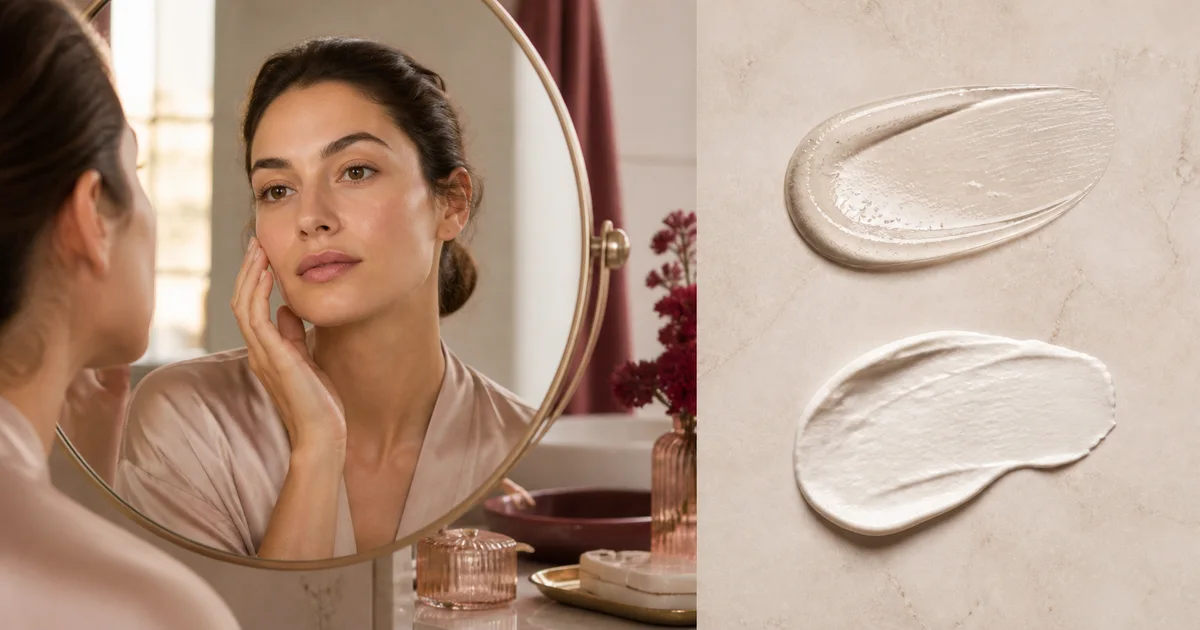
Your face may look oily after moisturizer because the formula is too rich, you are applying more than your skin needs, or your skin is dehydrated and absorbing water unevenly. It does not automatically mean moisturizer is wrong for you.
A little shine can be normal. A greasy film that stays for hours, pills under sunscreen, or causes clogged pores is a sign to adjust the routine.
Check the amount first
Start with about a pea-sized amount for the face, then add a little more for the neck if needed. Applying a thick layer does not make a moisturizer work better. Give it five to ten minutes to settle before judging the finish.
Apply moisturizer to slightly damp skin after cleansing. Damp skin can help the product spread evenly, so you need less. Pat rather than rubbing aggressively, especially if your skin is sensitive.
Check the texture
Creams and balms are useful for dry or very dry skin, but a gel-cream or light lotion may feel better on oily or combination skin. Look for labels such as lightweight, oil-free, or non-comedogenic, but remember that labels are a starting point rather than a guarantee.
If the product contains many layers of oils, silicones, or occlusive ingredients, it may simply be too heavy for your climate. Heat and humidity can make any moisturizer feel more noticeable.
Look at the layers underneath
Serum, facial oil, moisturizer, and sunscreen can combine into a shiny or sticky finish. Try using fewer layers for a week. You can read Can moisturizer be used without serum? for a simpler approach.
Also check whether your cleanser is too harsh. Over-cleansing can leave skin dehydrated, which may make you add more product and create a greasy surface. Gentle cleansing and consistent, lighter hydration often work better than stronger products.
When to switch
Change the moisturizer if it repeatedly stings, causes bumps, or remains uncomfortable after you reduce the amount. Patch-test the replacement first. If breakouts are persistent or painful, see a dermatologist rather than continuing to rotate products.
Frequently Asked Questions
Should I stop moisturizer if my face looks oily?
Usually no. Try less product or a lighter texture before skipping hydration completely.
How long should I wait before sunscreen?
Give moisturizer a few minutes to settle, then apply sunscreen evenly.
Can dehydrated skin look greasy?
Yes. Dehydrated skin can feel tight while producing surface oil.
Is gel moisturizer better for oily skin?
A gel-cream may feel lighter, but the best choice is the one that hydrates without irritation or heaviness.
Why does moisturizer pill?
Too much product, incompatible layers, or rubbing can cause pilling. Use thinner layers and allow each to settle.
Bottom line: reduce the amount, simplify the layers, and choose a lighter formula before giving up on moisturizer.